
What Is Joint Dysfunction? Causes, Symptoms, and Treatment Options
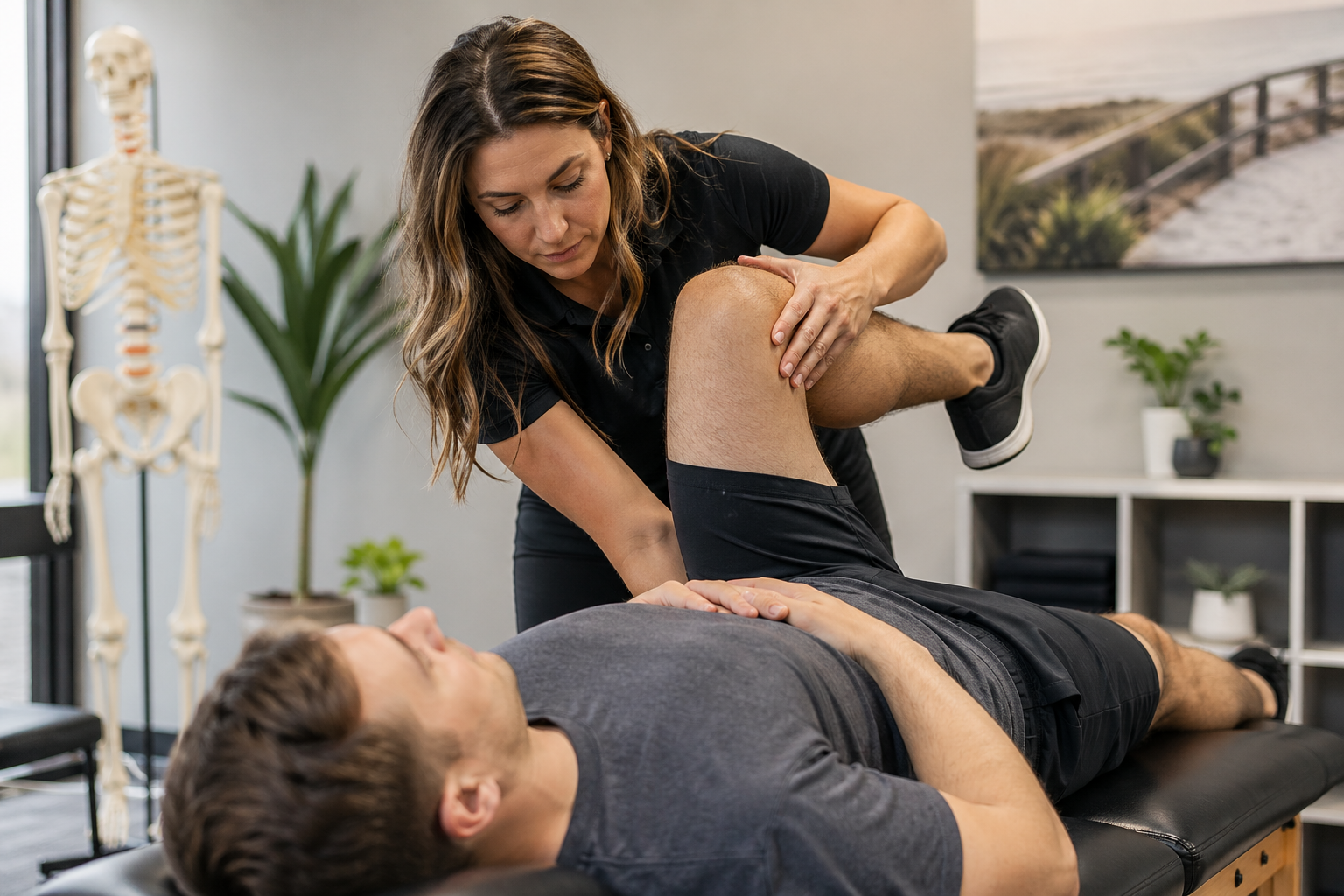
Joint pain is one of the most common reasons people seek care from a musculoskeletal provider, yet the underlying cause is frequently misunderstood. Many people assume joint pain means arthritis. In reality, a large portion of joint-related discomfort comes from joint dysfunction, a mechanical problem with how a joint moves rather than a disease process within the joint itself.
Understanding joint dysfunction symptoms and what drives them is an important first step toward finding care that actually addresses the source of the problem. This post covers what joint dysfunction is, what causes it, how it differs from arthritic conditions, and what treatment options are available for people in Grand Haven and the West Michigan area.
What Is Joint Dysfunction?
A joint is any point in the body where two or more bones meet. Joints are designed to move within a specific range and in specific directions, supported by cartilage, ligaments, muscles, and surrounding connective tissue. When a joint loses its normal movement quality, whether it becomes restricted, moves unevenly, or fails to load correctly, that is joint dysfunction.
Joint dysfunction is a mechanical problem. The joint is not necessarily damaged or diseased. It is not moving the way it was designed to move, and that altered movement creates stress on the surrounding structures. That stress is what produces pain, stiffness, and the compensatory patterns that often develop over time.
Joint dysfunction can affect any joint in the body, including spinal joints (vertebral segments), the sacroiliac joint, hips, knees, shoulders, and smaller joints in the hands, feet, and jaw.
Common Causes of Joint Dysfunction
Joint dysfunction rarely has a single cause. In most cases it develops through a combination of factors that accumulate over time.
Postural strain and repetitive loading are among the most common drivers. Sitting for extended periods, performing repetitive work tasks, or training movements that reinforce the same mechanical patterns can gradually alter how a joint loads and moves. Over time, small deviations in movement quality compound into meaningful dysfunction.
Muscle imbalances play a significant role. When the muscles surrounding a joint are uneven in strength or flexibility, the joint is pulled out of its optimal position during movement. The joint then compensates, and that compensation is where dysfunction typically begins.
Previous injury is another frequent contributor. Even injuries that appear to have fully healed can leave behind altered movement patterns, scar tissue restrictions, or inhibited muscles that change how a joint functions long after the acute phase has resolved.
Sedentary behavior reduces the circulation of synovial fluid within joints and limits the range of motion joints need to maintain healthy function. Joints that are not regularly moved through their full range tend to become restricted over time.
Occupational and athletic demands that place asymmetrical or high-volume loads on specific joints can accelerate dysfunction, particularly when recovery and movement variability are inadequate.
Symptoms to Watch For
Joint dysfunction symptoms vary depending on which joint is affected and how long the dysfunction has been present. Common presentations include:
Stiffness that is worse after prolonged sitting or inactivity and improves with gentle movement
A reduced range of motion in one direction or on one side compared to the other
A sensation of catching, clicking, or grinding during movement
Localized aching or discomfort that is difficult to pinpoint precisely
Muscle tightness or guarding around the affected joint
Pain that increases with sustained postures or specific activities and eases when position changes
Referred discomfort into adjacent areas, such as hip dysfunction producing sensations in the lower back or thigh
It is worth noting that joint dysfunction symptoms do not always stay local. The body adapts to restricted or poorly moving joints by recruiting surrounding structures to compensate, which is why a problem in one area often produces discomfort somewhere else entirely.
Joint Dysfunction vs. Arthritis: Understanding the Difference
This distinction matters because it directly affects what kind of care is appropriate.
Joint dysfunction is a mechanical problem. The joint structure itself is intact, but movement quality is impaired. It responds well to manual therapy, movement correction, and functional rehabilitation. Symptoms typically fluctuate with activity levels and posture, and they often improve relatively quickly with the right intervention.
Osteoarthritis involves actual changes to joint cartilage and bone over time. It is a degenerative process that tends to develop gradually and is confirmed through imaging. Symptoms often include joint space narrowing visible on X-ray, bony changes, and morning stiffness that typically resolves within 30 minutes of moving.
Inflammatory arthritis such as rheumatoid arthritis involves immune system activity that attacks joint tissue. It tends to affect multiple joints symmetrically, produces prolonged morning stiffness often exceeding 45 minutes, and may be accompanied by systemic symptoms such as fatigue and general malaise.
The important distinction is that arthritis and joint dysfunction can coexist. A person with arthritic changes in their spine or hips can also have significant mechanical joint dysfunction layered on top. Addressing the mechanical component can meaningfully reduce discomfort even when structural changes are present.
When to Seek Medical Testing
Most joint dysfunction presentations do not require imaging or lab work at the outset. A thorough movement-based clinical assessment is typically more informative than an X-ray for understanding what is actually happening mechanically.
However, certain presentations warrant further investigation. These include joint pain accompanied by significant swelling, warmth, or redness; symptoms that are consistent across all times of day and do not change with movement or position; systemic symptoms such as fever, fatigue, or unexplained weight loss alongside joint pain; a history of inflammatory arthritis or autoimmune conditions; symptoms that follow significant trauma; or pain that fails to respond to conservative care within a reasonable timeframe.
If any of these apply, a conversation with your primary care provider or a specialist is the appropriate next step. For most people presenting with mechanical joint pain, stiffness, and restricted movement without these flags, a functional clinical assessment is where to begin.
Conservative Treatment Options
Joint dysfunction responds well to conservative care when it is accurately identified and addressed directly. The most effective approaches target both the joint mechanics and the surrounding muscular system.
Manual therapy and chiropractic adjustments restore movement quality to restricted joints. When a joint is not moving through its full range, targeted mobilization or manipulation re-establishes that movement and reduces the compensatory strain being placed on surrounding structures.
Trigger point therapy addresses the myofascial component of joint dysfunction. Muscles surrounding a dysfunctional joint often develop areas of sustained tension, known as trigger points, that contribute to pain and restrict movement further. Releasing these patterns is a key part of restoring normal joint function. Trigger point therapy for muscle pain at Movement Chiropractic Center targets exactly this component of the dysfunction cycle.
Functional rehabilitation involves correcting the movement patterns and muscle imbalances that allowed the dysfunction to develop in the first place. Without this step, joint dysfunction has a tendency to recur because the underlying mechanical drivers remain unchanged.
Activity modification during the acute phase reduces the load on the affected joint while care is underway, without eliminating movement entirely. Maintaining movement at tolerable levels supports recovery better than rest alone.
Education and self-management equip patients with an understanding of their own movement patterns, postural habits, and activity choices so they can actively support their own recovery and reduce the likelihood of recurrence.
Care in Grand Haven: Getting an Accurate Assessment
If you are experiencing joint stiffness, restricted movement, or pain that follows a mechanical pattern, an accurate functional assessment is the starting point.
At Movement Chiropractic Center in Grand Haven, Dr. Hailey Watkins evaluates joint dysfunction with a whole-body perspective, considering how movement patterns, muscle balance, and joint mechanics interact. With a background in kinesiology and additional training working with athletes, active adults, and families, Dr. Watkins brings a thorough and individualized approach to identifying what is actually driving your symptoms.
Schedule an evaluation at Movement Grand Haven to take the first step toward understanding your joint function and what can be done about it.
What Patients Are Saying
"Best adjustment I've had in 20 years. Good muscle work mixed in, too. Highly recommend." Luke H., Google Review
"Great with kids! Friendly and inviting. Respectful and informative. Effective, thorough, and professional. 10/10 would highly recommend." Ried M., Google Review
"Excellent experience! Dr. Hailey is very thorough." D.B. Cooper, Google Review
Ready to Move Without Restriction?
Joint dysfunction is not something you have to manage indefinitely. With an accurate assessment and the right care, most people with mechanical joint pain see meaningful improvement.
If you are in Grand Haven or the surrounding West Michigan area, Movement Chiropractic Center is ready to help you understand what your joints are doing and how to address it.
Schedule your appointment today and start moving the way you were designed to.
849 Park Avenue, Suite 200, Grand Haven, MI 49417 Phone: (616) 847-2727 Hours: Monday, Wednesday, Friday 8am to 7pm | Thursday 11am to 5pm | Tuesdays and Weekends by appointment