
How to Know If Your Pain Is Mechanical, Neurological, or Inflammatory
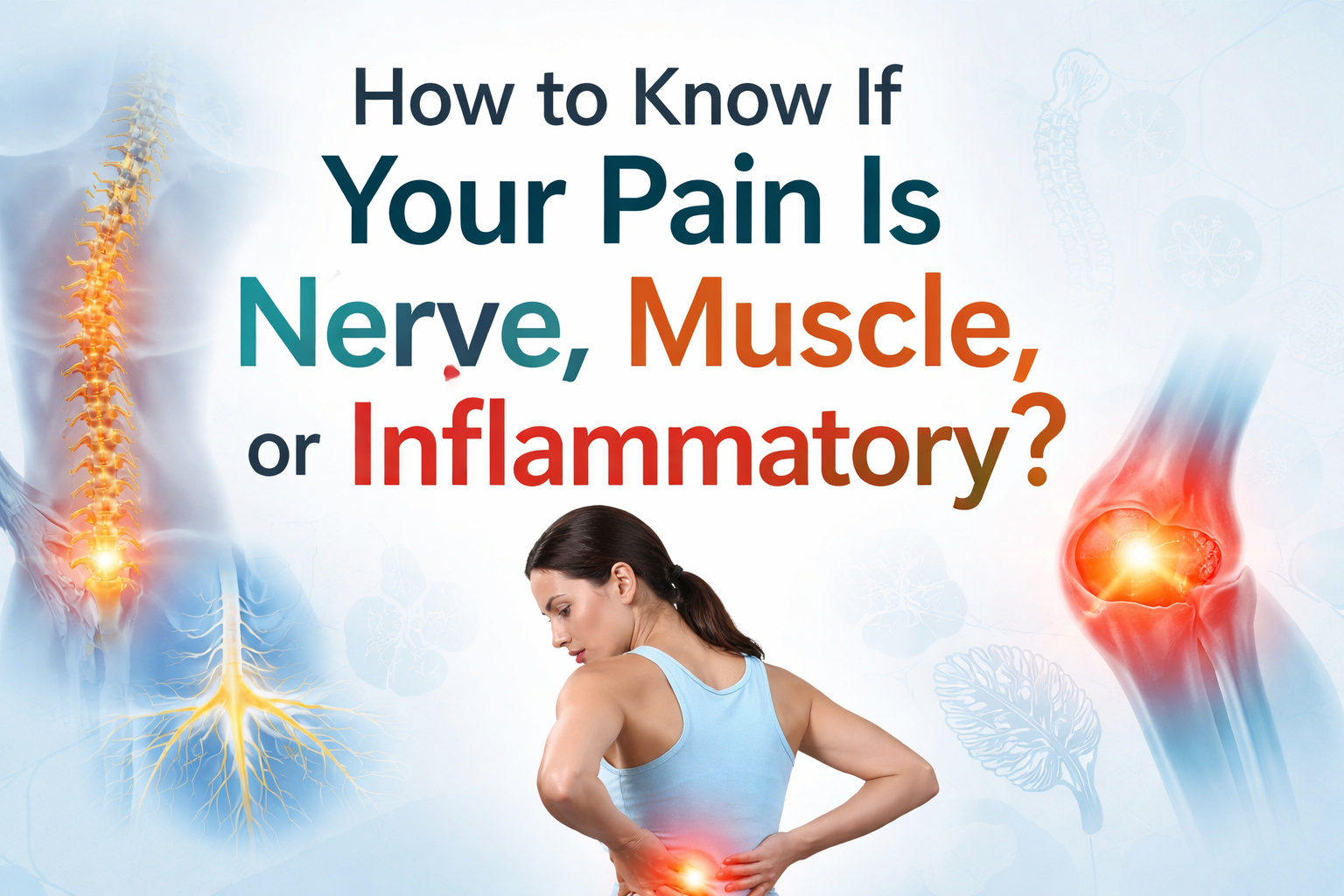
According to the National Center for Health Statistics24.3% of U.S. adults experienced chronic pain in 2023, and 8.5% reported high-impact chronic pain that frequently limited work or daily activities. Pain is one of the most common reasons adults seek healthcare, yet many people are unsure what type of pain they are actually experiencing.
Understanding the types of pain explained in clinical care is important because not all pain behaves the same way. Mechanical pain, neurological pain, and inflammatory pain each have different causes, patterns, and treatment considerations. In Grand Haven and throughout West Michigan, many people seek conservative care for persistent back, neck, or joint discomfort. Identifying the type of pain is often the first and most important step toward choosing the right approach.
Why Understanding the Type of Pain Matters
Pain is a symptom, not a diagnosis. Two people can describe similar discomfort but require very different types of care. Treating pain without understanding its origin can delay improvement or overlook important warning signs.
Mechanical pain often responds well to movement based therapies and manual care. Neurological pain may require further evaluation if nerve irritation is present. Inflammatory pain sometimes points to systemic processes that need medical testing. A structured evaluation helps clarify which category your symptoms fall into so that treatment is appropriate and safe.
What Is Mechanical Pain
Mechanical pain originates from muscles, joints, ligaments, or structural movement dysfunction. It is typically influenced by posture, activity level, or repetitive strain.
Common characteristics include:
• Pain that worsens with certain movements
• Relief when changing position or resting
• Localized tenderness
• Stiffness after inactivity
Examples include muscle strain, joint restriction, or postural stress from prolonged sitting.
For individuals dealing with tight bands of muscle or localized tenderness, targeted approaches such as trigger point therapy for muscle pain can help address mechanical contributors.
What Is Neurological Pain
Neurological pain involves irritation, compression, or dysfunction of a nerve.
Common neurological symptoms include:
• Radiating pain into the arm or leg
• Numbness or tingling
• Burning or electric sensations
• Muscle weakness
At Movement Grand Haven, functional muscle testing in Grand Haven is used as part of a broader evaluation process to assess strength patterns, nerve involvement, and movement coordination.
If neurological symptoms are progressive, worsening, or accompanied by weakness, further medical evaluation may be necessary.
What Is Inflammatory Pain
Inflammatory pain is driven by immune system activity.
Typical features include:
• Morning stiffness lasting longer than 30 to 60 minutes
• Swelling or warmth around joints
• Persistent discomfort not clearly tied to movement
• Fatigue
Chronic inflammatory pain may require medical testing to rule out autoimmune or systemic conditions.
Key Differences Between Mechanical, Neurological, and Inflammatory Pain
Mechanical pain is usually activity dependent and localized. Neurological pain frequently radiates and may include numbness, tingling, or weakness. Inflammatory pain tends to feel deep, stiff, and persistent and may be accompanied by swelling or prolonged morning stiffness.
Understanding these distinctions allows providers to tailor care rather than applying a generalized approach.
When Pain Requires Immediate Medical Evaluation
Seek immediate medical evaluation if you experience:
• Loss of bladder or bowel control
• Progressive numbness or muscle weakness
• Sudden severe headache
• Fever with spinal pain
• Unexplained weight loss
• Significant trauma
• History of cancer with new onset back pain
These red flags may indicate conditions that need imaging, laboratory testing, or specialist care.
How a Functional Assessment Identifies the Root Cause
A structured assessment looks at movement patterns, muscle activation, joint mobility, and nervous system responses.
When appropriate, conservative care options such as therapeutic massage in Grand Haven may be incorporated to address soft tissue restrictions.
Evaluations may also include functional muscle testing in Grand Haven to determine whether weakness is due to mechanical inhibition, nerve irritation, or compensatory movement patterns.
Where to Seek Care in Grand Haven
Understanding whether your pain is mechanical, neurological, or inflammatory is the first step toward choosing the right path forward. The next step is working with a provider who takes the time to evaluate your whole picture.
Dr. Hailey Watkins was born and raised in Grand Haven and is proud to serve the community that shaped her. With a background in kinesiology and advanced chiropractic training, she focuses on movement, function, and individualized care for patients of all ages, including athletes, children, and expecting mothers.
At Movement Chiropractic Center, care begins with a thorough assessment designed to understand how your body is moving and responding. If conservative care is appropriate, a personalized plan may include chiropractic adjustments, massage therapy, or trigger point therapy. If symptoms suggest the need for additional medical evaluation, that guidance is part of responsible care.
If you are ready to better understand your symptoms and take the next step toward healing, you can schedule your therapy.